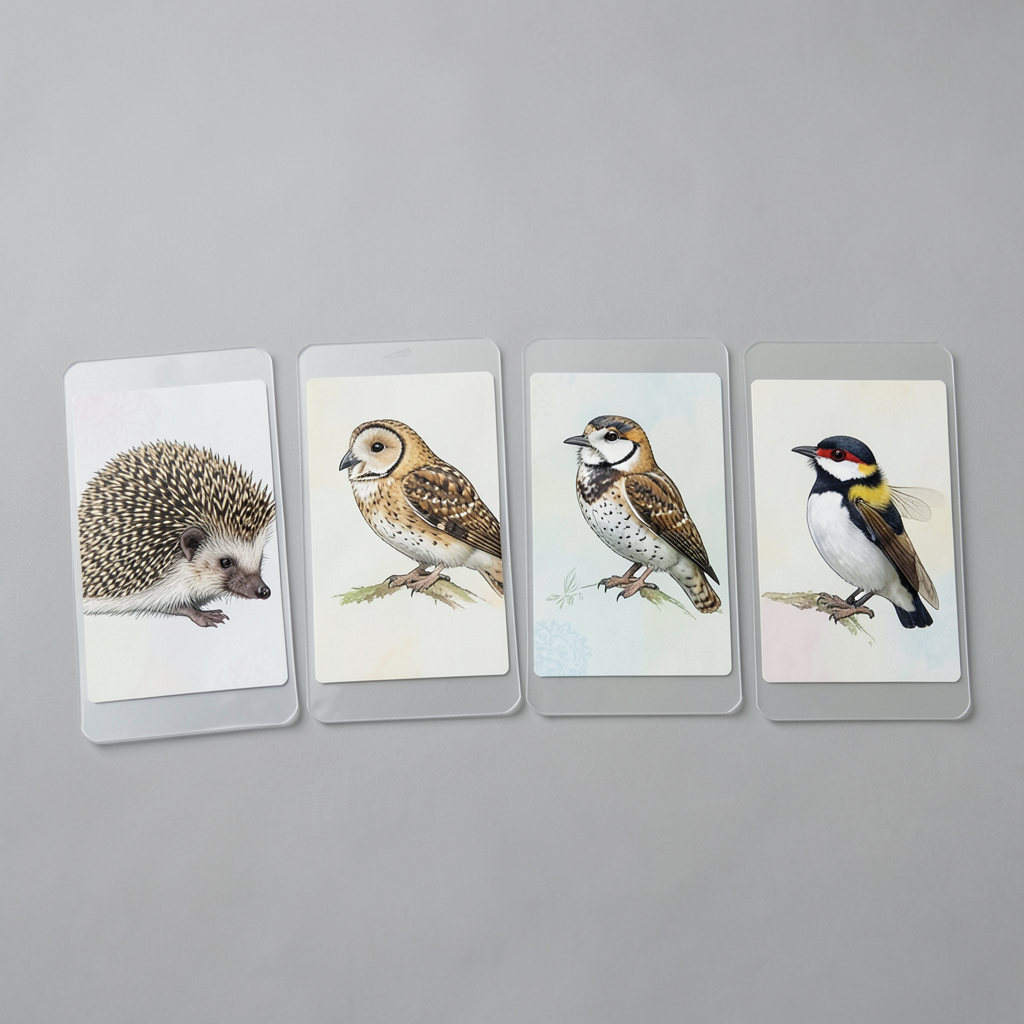

The Bank of England has announced that four native British species will replace historical figures on the next generation of polymer notes.
The selected creatures comprise the Atlantic puffin, barn owl, buff-tailed bumblebee, and European hedgehog.
The central bank has yet to specify which denomination will feature each animal.
The initial redesigned notes are anticipated to enter general circulation within the coming years.
The barn owl population extends across most of Oxfordshire while remaining absent from the Scottish Highlands.
The species faces conservation challenges in Northern Ireland.
Meanwhile, the European hedgehog thrives throughout Oxfordshire, with official records documenting 803 sightings in the region.
Approximately 30 percent of gardens in the county report regular hedgehog visitors.
Nearly half a million voters participated in selecting the winning species from an initial list of 18 candidates spanning mammals, birds, amphibians, insects, and fish.
The hedgehog secured the highest support among mammal options, gathering 259,665 votes.
The barn owl dominated the avian category with 270,596 selections.
The buff-tailed bumblebee emerged as the most popular choice in its category with 360,399 votes.
The puffin’s inclusion came as a notable outcome.
The seabird received 183,137 votes, placing it behind the common kingfisher, which accumulated 211,277 selections in the bird division.
The Bank had emphasised from the beginning that the four creatures receiving the greatest individual totals would not automatically be declared winners.
The selection panel also evaluated how the complete set would function as a unified thematic collection.
Other species attracting substantial public support but ultimately unsuccessful included the brown hare, emperor dragonfly, common frog, marsh fritillary butterfly, and grey seal.