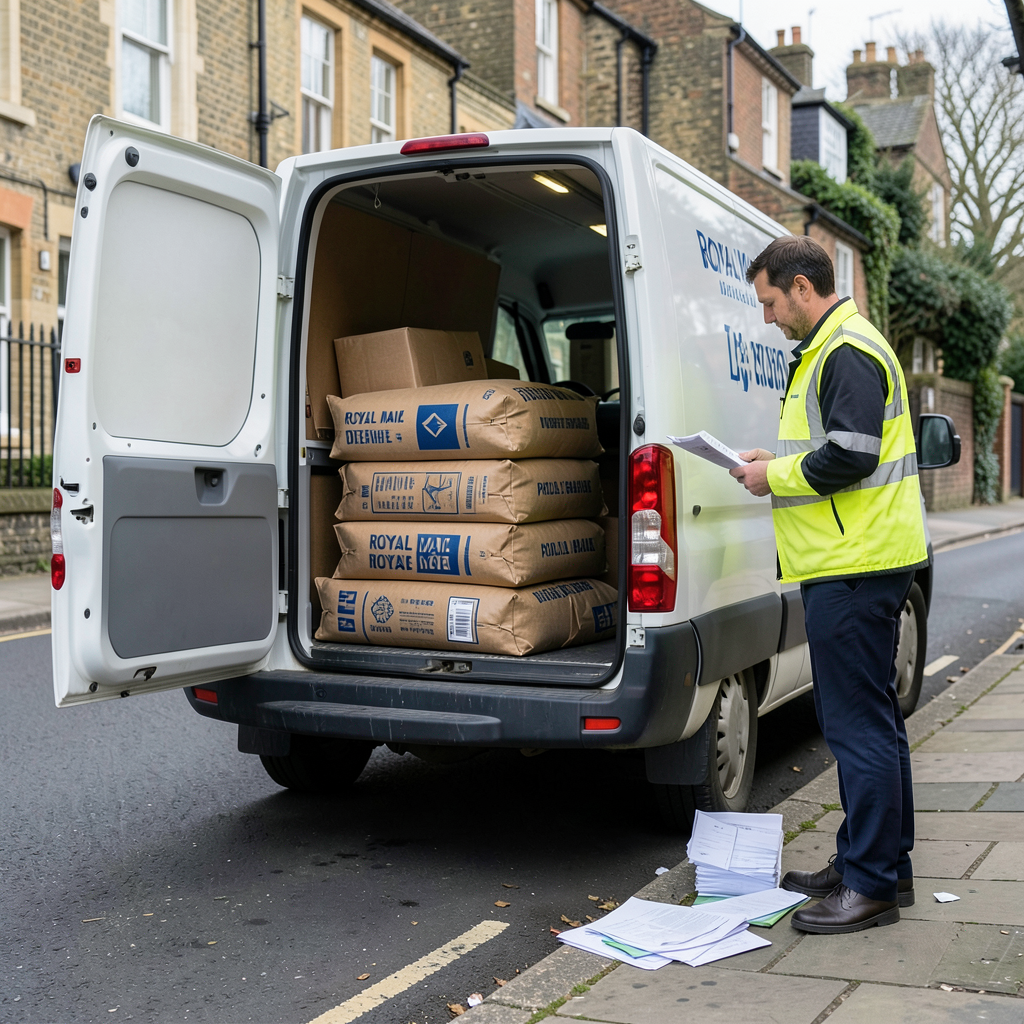

A cross-party group of 34 parliamentarians has raised serious concerns about postal delivery standards, with an open letter to regulators highlighting persistent failures by Royal Mail to meet its service obligations.
The correspondence, coordinated by Labour representative Anneliese Dodds who serves the Oxford East constituency, was addressed to communications regulator Ofcom and Business Secretary Jonathan Reynolds.
The document outlined systematic shortcomings in mail delivery performance under both existing and recently renegotiated Universal Service Obligation requirements.
Following amendments finalised in July 2025, the mandated targets specify that 90 percent of First Class items should arrive the following day, reduced from the previous threshold of 93 percent, while 95 percent of Second Class mail must be delivered within three working days, compared with 98.5 percent previously.
However, the MPs’ letter indicated that these modified benchmarks remain unmet, with performance data from the most recent financial year revealing that fewer than 76 percent of First Class shipments and approximately 90 percent of Second Class items reached recipients within the required timeframes.
The signatories acknowledged that the revised performance indicators were introduced to establish more attainable benchmarks and enable overall service enhancement.
The initiative to elevate delivery rates within defined periods received acknowledgment in the correspondence.
A primary concern expressed centred on Royal Mail’s apparent unwillingness to recognise current deficiencies, which the MPs argued would impede genuine improvement efforts.
The letter further suggested that Ofcom lacks sufficient regulatory authority to compel meaningful progress.
Concerns were also raised regarding the impact on constituents, with correspondence describing significant disruption caused by postal delays ranging from missed healthcare appointments to financial penalties arising from late bill payments.
Staff working at local sorting facilities were cited as having direct insight into operational difficulties and potential remedies, yet senior management reportedly continued to dispute the existence of local problems.
The letter characterised official responses as following a predictable pattern that demonstrated disregard for community concerns.
Signatories maintained that acknowledging shortcomings and engaging constructively with practical solutions must accompany broader Universal Service Obligation reform to achieve tangible improvement.
The MPs additionally noted that financial penalties issued by Ofcom in recent years had proven insufficient to drive meaningful enhancement in service delivery.
Royal Mail was contacted for response to the points raised.