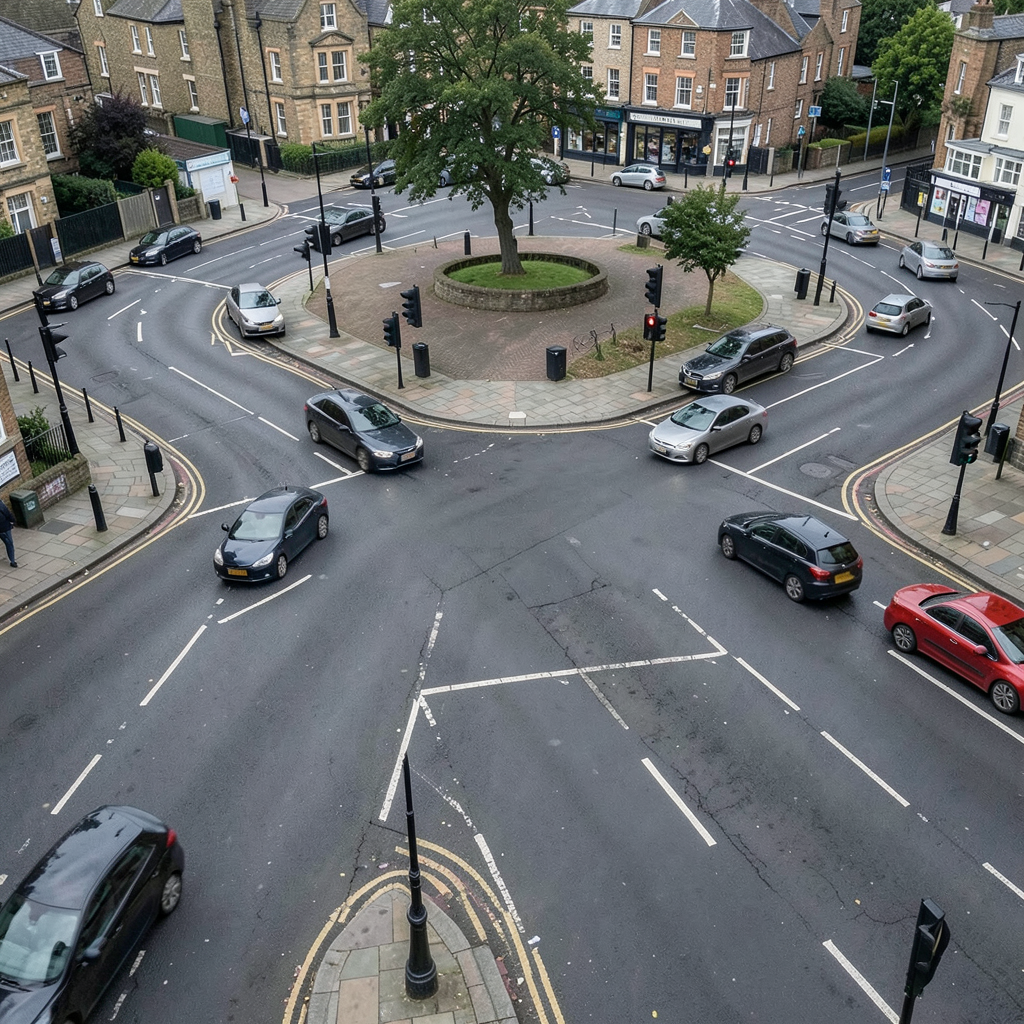

Proposals aimed at limiting vehicle movement at a hazardous intersection in Oxford have been deemed insufficient by a road safety advocate, following the release of a transport assessment identifying improper usage by drivers.
Oxfordshire County Council’s most recent transportation study reveals that the service carriageway connecting Rose Hill, Henley Avenue and Church Cowley Road is experiencing significant misuse.
According to the document, drivers are treating the route as an alternative passage to circumvent traffic controls, a practice authorities believe is contributing to road traffic incidents.
The assessment, prepared by the Director of Environment and Highways, puts forward a recommendation that the authority implement an experimental prohibition preventing vehicles from travelling in a northerly direction along a section of the service carriageway.
Matt Jerwood, who coordinated the petition calling for intersection safety improvements, acknowledged the report’s findings and the potential benefits of proposed interventions.
However, he maintained that these measures would fail to tackle the underlying concerns.
He explained that the suggested modifications would not enhance the safety of those crossing the intersection, would not address excessive vehicle speeds, and would not deter drivers from ignoring traffic signals.
He indicated that the petition had been specifically centred on securing safe crossing facilities.
While expressing appreciation for the progress noted regarding the service carriageway, he conveyed frustration that the wider context had not been incorporated into the solution.
His assessment highlighted that the fundamental difficulty stems from excessive traffic volumes being directed to the intersection without accompanying speed regulation, signal enforcement, or secure crossing opportunities.
He further noted that any exemption permitting access to the service carriageway would probably be confined to households situated directly adjacent to it, excluding residents opposite or in close proximity who previously enjoyed parking privileges due to double yellow lines and cycling infrastructure positioned beyond their doorsteps.
He also pointed out that taxis could potentially benefit from exemptions despite being identified as primary offenders for excessive speeds along the service carriageway, suggesting these specifics would influence both the effectiveness and public reception of any changes.
The petition campaign had advocated for the prioritisation of installing no fewer than two pedestrian crossing facilities, alongside interventions targeting speed reduction and traffic signal compliance.
Among the options examined were the deployment of temporary signal installations equipped with pedestrian crossing functionality, provisional zebra crossing arrangements near the intersection, strategies for diminishing traffic burden at the location, enhanced traffic observation systems, speed detection apparatus and associated signage, the reopening of previously obstructed routes, together with an assessment of parking arrangements and safe accessibility to nearby educational establishments, medical services, commercial areas, residential properties, and additional community facilities.
Matt Jerwood further raised concerns regarding the practicalities of implementing any new restrictions, noting that automatic number plate recognition technology would probably prove prohibitively costly while the constabulary has progressively distanced itself from taking responsibility for law enforcement on these matters.
He additionally observed that the authority had recently fitted illuminated road studs along cycling lanes at the intersection but had subsequently communicated to the campaign collective that financial resources were unavailable for delivering safer crossing provisions.
He commented that the local population had received inadequate consideration and that while certain elected members had demonstrated initiative and support, others had remained uninvolved and silent on the matter.