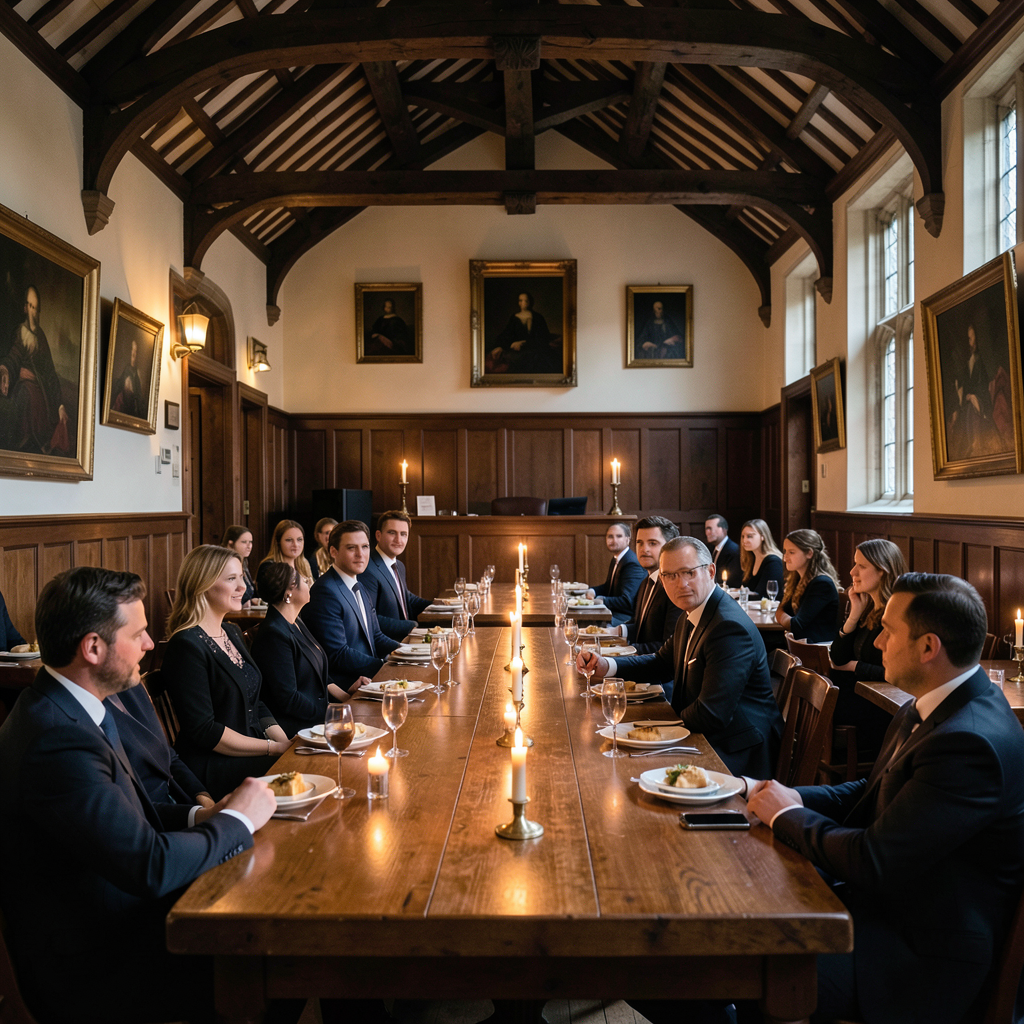

Oxford’s academic communities have long grappled with the intersection of tradition and contemporary expectations, particularly regarding the rituals surrounding formal collegiate dinners.
Debates within student publications have surfaced questions about dress codes, historical significance, and the extent to which these practices reflect modern values of inclusivity and belonging.
Two recent contributions to The Oxford Student have approached the topic of formal attire from markedly different perspectives.
One piece examined the ambiguities inherent in dress requirements for formal dinners, acknowledging both the playful interpretation of guidelines and the weight of established tradition.
Another article expressed concern that modifications to dress codes might represent a departure from the historical integrity of Oxford’s dining customs.
The unifying thread between these perspectives is the emphasis on history, specifically the communal, celebratory, and intellectual heritage embedded in Oxford’s formal dinner traditions.
While arguments favouring democratic and inclusive approaches to formal dinners and their associated dress codes hold theoretical appeal, questions persist regarding the practical realisation of these values.
The suggestion that formal attire serves to uphold an atmosphere originating from monastic communities raises considerations for various members of the university population.
The historical context of such traditions, dating to periods when women were not admitted to the university, prompts reflection on the evolution of collegiate social practices.
One commentator observed that the path to acceptance within Oxford’s social fabric remains unclear.
The transition of longstanding social customs across different eras creates potential for misunderstanding regarding what constitutes belonging within the collegiate community.
In contrast, an alternative perspective offered a more direct interpretation: for formal dinners, black tie attire is deemed sufficient, with the notion that proper dress establishes equality among attendees.
However, this perspective warrants examination.
While formal attire may theoretically create equal footing on paper, subtle discriminatory behaviour can persist regardless of dress code compliance.
Comments regarding personal appearance or attire can undermine the intended spirit of equality that dress codes aim to establish.
The values associated with propriety and convention, as discussed in related commentary, may occasionally function as surface-level covering over more problematic conduct.
The discourse surrounding tradition and contemporary practice reveals divergent interpretations of modernisation.
One analysis applied the term modern primarily to technological developments, such as electric lighting, and the architecture of newer postgraduate colleges.
Another perspective employed modernisation repeatedly in the context of cultural discourse, arguing that alterations to dress codes could threaten the enduring legacy of Oxford’s traditions.
This viewpoint characterised modernisation as potentially erasing the distinctive character of Oxford’s collegiate atmosphere and called for preservation of traditional standards.
The symbolic significance of attire has become a focal point of this debate.
Arguments suggest that clothing choices connect individuals to Oxford’s intergenerational heritage, imbuing formal occasions with deeper meaning.
Yet this framing raises questions about whose heritage is being represented and celebrated.
Oxford’s history encompasses multiple transformative moments.
While traditions may have originated in monastic contexts, significant milestones include the admission of the first Black male student in 1873 and the establishment of Lady Margaret Hall in 1878, which marked women’s formal entry into the university.
This evolution acknowledges both the institution’s historical limitations and its progression toward greater diversity.
Contemporary discourse has highlighted ongoing challenges that students face regarding belonging and representation within the university community.
Regarding formal dinners, attire expectations demonstrate considerable flexibility.
Black tie dress codes may be interpreted through various cultural lenses, accommodating diverse traditions and personal circumstances.
The range of acceptable interpretations suggests that rigid enforcement of narrow standards may not align with the heterogeneous nature of Oxford’s current student body.
At the moment of Grace during formal dinners, the assembled company reflects considerable diversity.
Attendees bring varied backgrounds, beliefs, and identities to these occasions.
Some may hold secular perspectives, others adhere to different religious traditions, and others navigate questions of gender expression and personal identity within institutional contexts that have not always been welcoming to all.
The fundamental argument supporting formal dinners as spaces for community building holds merit.
However, the manner in which such traditions are expressed, presented, and performed should not prioritise historical practices that reflected exclusionary attitudes over the contributions and presence of the diverse individuals who constitute Oxford’s present academic community.
The recognition of this diversity represents an evolution of tradition rather than its abandonment, creating more inclusive environments for all members of the collegiate community.