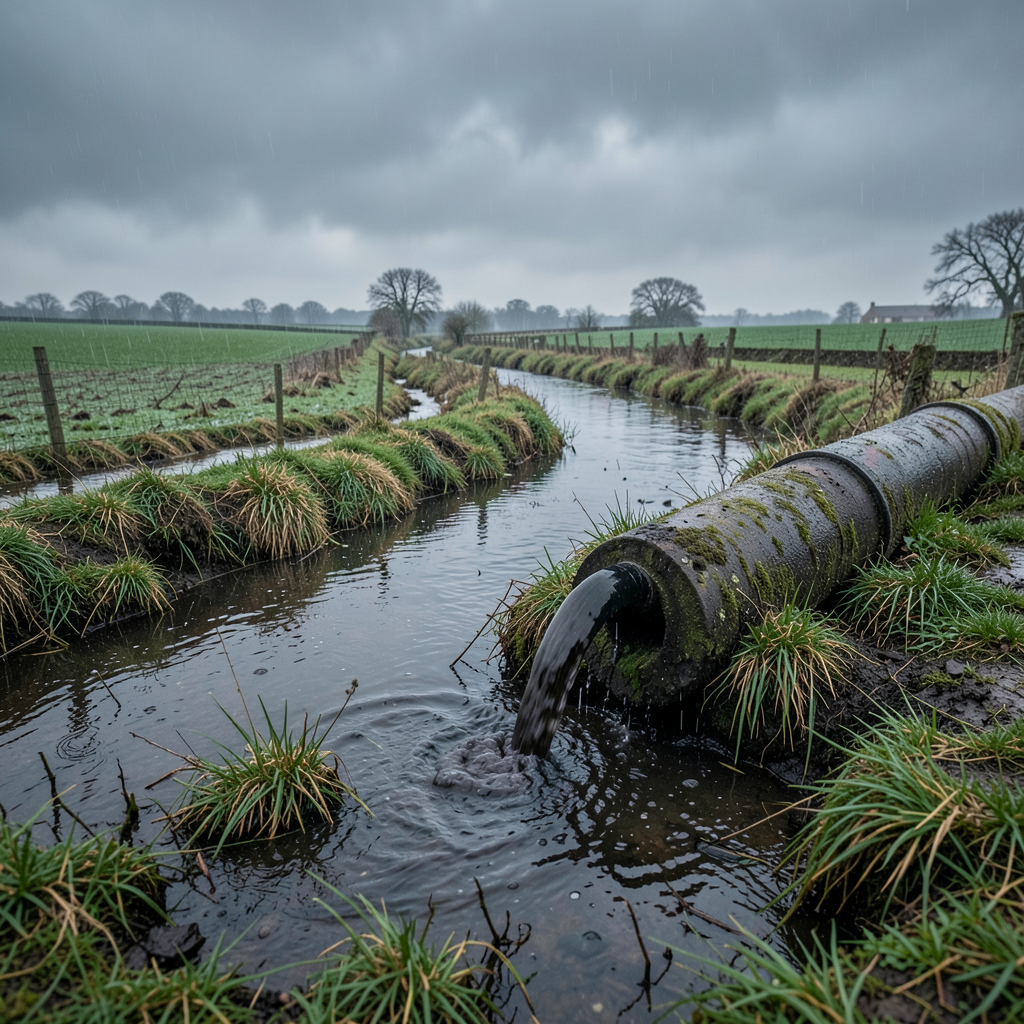

A visualisation of all sewage releases by Thames Water has demonstrated that untreated waste travelled approximately 80 miles during the early part of this week.
Data compiled by SewageMap.co.uk indicates that the utility company released sewage throughout the county following recent rainfall.
One particular discharge covered roughly 80 miles, tracing a path from Stewkley, situated north of Aylesbury, to Kingston-upon-Thames in Greater London.
The release, which occurred for a duration of 45 minutes on Monday morning, entered Hardwick Brook before flowing into the River Thame close to Aylesbury and ultimately reaching the River Thames near Dorchester-on-Thames.
Additional untreated releases crossed the Oxfordshire and Buckinghamshire boundary near Thame, then passed close to Abingdon before continuing through Reading, Henley, Maidenhead, and Slough, eventually entering the Thames near Kingston-upon-Thames.
A Thames Water representative explained that storm overflows function in accordance with Environment Agency parameters and form a legally sanctioned component of the wastewater infrastructure.
The systems help prevent sewage from backing up into residential properties during periods of intense rainfall, with permitted releases being diluted by rainwater.
Over the coming five years, the company intends to implement the most extensive improvement to its wastewater network in 150 years, incorporating greater treatment capacity, reduced storm discharges, and new nutrient reduction initiatives.
A Department for Environment, Food and Rural Affairs representative stated that the Government understands public frustration regarding discharges contaminating rivers, lakes, and coastal waters.
Storm overflows should only be activated under highly specific conditions, and the current administration has already taken enforcement measures against water companies failing to meet required standards, establishing the concealment of illegal sewage spills as a criminal offence.
Sewage releases continue to represent a significant problem nationally.
So far this year, 43 percent of the 573 designated bathing locations across England and Wales have received warnings.