
A county councillor from Oxfordshire is opposing a road safety initiative intended to improve conditions for families and children travelling to and from school.
The School Streets programme has been established near several schools throughout the county, introducing temporary vehicle restrictions during morning arrival and afternoon departure periods at educational institutions.
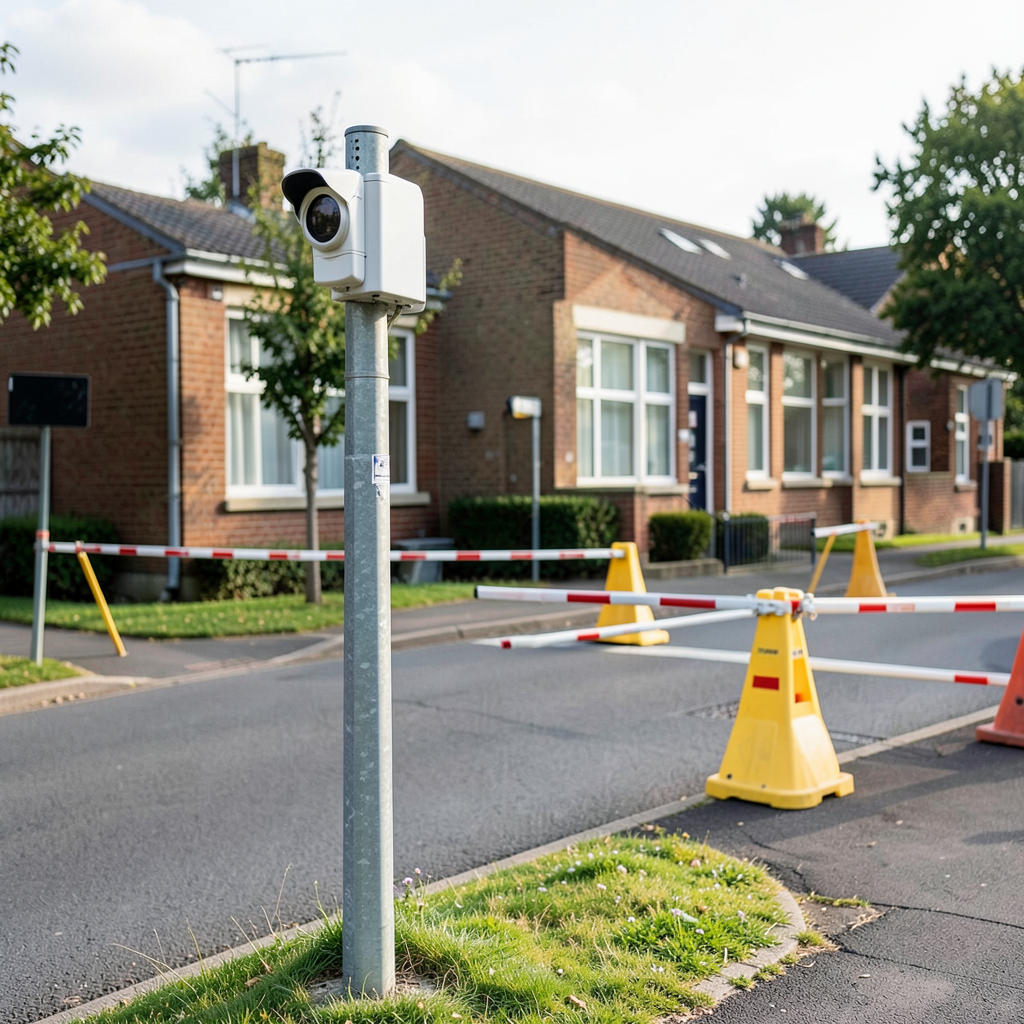
Automatic number plate recognition technology is employed to enforce these restrictions, though the cameras designated for schemes at St Birinus School and Willowcroft Community Primary School, both located on Mereland Road, remain inactive.
Conservative county councillor Liam Walker, who represents the Hanborough and Hailey division, has raised formal objections to the implementation of a School Streets scheme in Carterton.
The proposed initiative would affect Edith Moorhouse Primary School and St Joseph’s Catholic Primary School.
On social media, Walker stated that he had met with fellow councillors and parents in Carterton to discuss the School Streets scheme introduced by Oxfordshire County Council.
He indicated that the measure lacked community backing yet was nevertheless imposed on local residents and families.
Walker has expressed support for a petition demanding the cancellation of the scheme.
The petition maintains that the Liberal Democrat-led School Streets trial in Carterton commenced in September despite ongoing objections from local residents regarding the potential effects on those living in the vicinity.
It notes that the initiative employs automatic number plate recognition cameras to limit vehicle access to multiple residential streets during school drop-off and collection times.
The petition further states that while ensuring children’s safe passage to school represents a shared priority, such objectives should only be pursued with genuine community backing and practical measures that also accommodate local residents.
Local Conservative representatives are continuing their opposition to the scheme, calling on the county council to heed resident concerns, reconsider the approach, and collaborate with communities and schools on safety improvements that do not disproportionately disadvantage those residing in the area.