
Oxford’s top council official has given a enthusiastic endorsement to plans for implementing a visitor levy on those staying overnight in the city.
Legislation permitting such charges could become available throughout England following a government announcement made on September 10.
The initiative would grant combined authority mayors expanded jurisdiction to establish the tax.
The proposed mechanism would calculate the levy as a proportional addition to accommodation expenses rather than applying a fixed monetary amount.
Ministers indicated this structure would help preserve affordable travel options for families and budget-conscious visitors, while leaving decisions regarding the specific rate and allocation of funds entirely to regional administrators.
Although no maximum threshold would be set nationally, government insiders indicated most mayors would likely opt for modest percentage increases.
Susan Brown, who leads Oxford City Council, declared strong backing for the proposals, asserting that tourism generated significant pressure on municipal resources.
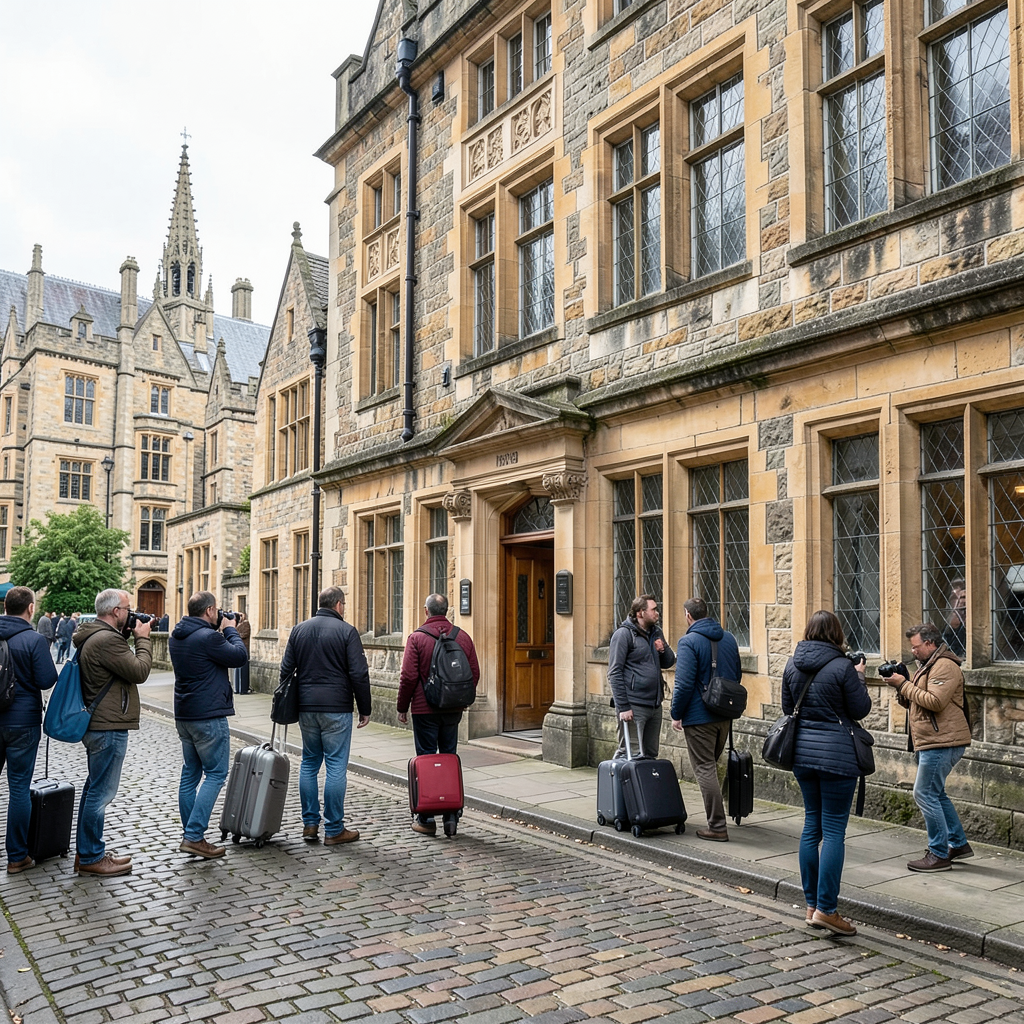
Oxford hosts in excess of 500,000 international travellers annually, alongside additional visitors originating from elsewhere within the United Kingdom.
Expenditure data indicated that one pound in every six spent via debit or credit card within the city’s central area originated from tourists, with the sector sustaining a substantial portion of local employment.
The presence of such large visitor numbers necessitated additional council expenditure on lavatory facilities, road maintenance, and waste management services.
Brown stated that her authority had lobbied extensively for legislative powers to introduce such a levy, enabling tourism revenue to offset costs currently borne by local taxpayers while facilitating enhancements benefiting both residents and guests.
The announcement forms a component of the executive’s broader decentralisation programme, which seeks to transfer planning and spending responsibilities from central government to regional administrations.
Angela Rayner, who serves as both Deputy Prime Minister and Secretary of State for Housing, Communities and Local Government, commented that the provision would enable mayors to channel tourism-derived income back into their respective areas.
Brown emphasised that securing mayoral status for the region had become increasingly vital to take full advantage of the new powers once they become law.
Representatives from the accommodation and hospitality sector voiced concerns that the policy could harm the tourism industry.
The trade organisation UKHospitality estimated the charge could result in economic losses of £1.6 billion and threaten numerous employment positions across the sector.
Government ministers pointed to existing implementations of comparable systems in various European nations, American states and Canadian provinces, where visitor levies have successfully funded amenities and attractions serving both local populations and tourists.