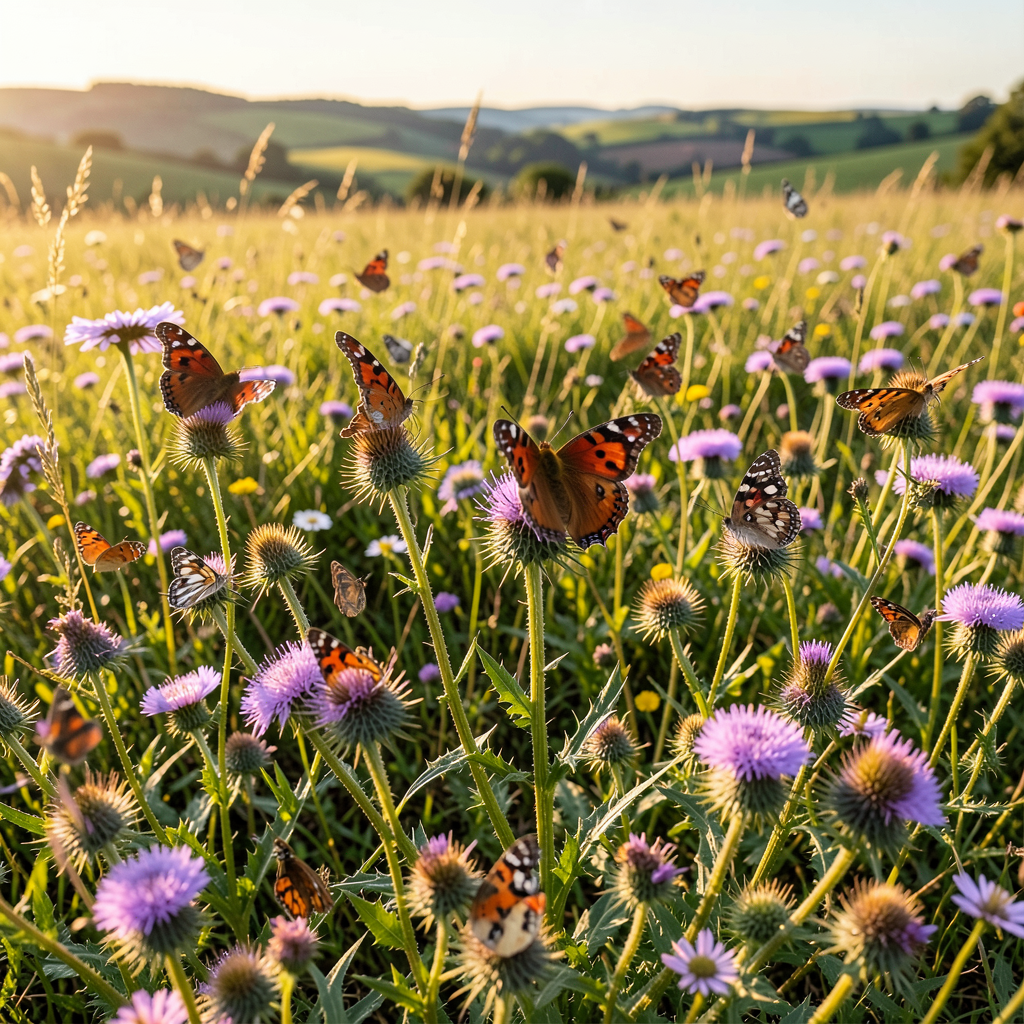

The Berkshire, Buckinghamshire and Oxfordshire Wildlife Trust has provided insight into how butterfly and moth populations have responded to the summer’s extreme temperatures.
The UK is home to 60 butterfly species, with approximately 40 of these found across the three counties managed by the Trust.
This diversity, however, pales in comparison to the moth population, which encompasses roughly 2,500 species and presents significant identification challenges.
Despite the common perception of moths as nocturnal, brown creatures, this characterisation is inaccurate.
Numerous moth species are diurnal and display striking colours and elaborate patterns comparable to those of butterflies.
Current observations suggest it has been a favourable season for lepidoptera, the insect order encompassing both butterflies and moths.
While comprehensive population data remains forthcoming, considerable activity has been reported across the region.
The physiological characteristics of lepidoptera, being ectothermic organisms, mean they rely on external temperature sources for metabolic function.
The unprecedented heatwaves experienced during the summer created ideal conditions for essential behaviours including foraging for nectar, locating mates, and reproducing.
Nevertheless, the broader ecological picture reveals complications.
The same heatwaves and drought conditions intensifying due to human-induced climate change have proved detrimental to vegetation, with numerous plant species exhibiting premature browning and withering.
The nutritional requirements of butterflies present a critical consideration.
Immature stages, known as caterpillars, depend on specific host plants for sustenance, typically requiring particular plant species to complete their development.
The early dieback of these caterpillar food sources means the full ecological consequences of this year’s conditions will not become apparent until subsequent seasons.
The hummingbird hawk-moth exemplifies species navigating climatic shifts.
This moth derives its common name from its visual similarity to small American hummingbirds, achieved through wing beats exceeding 80 per second that enable hovering flight.
From this hovering position, the insect extends its proboscis, a tubular feeding apparatus resembling a combination of tongue and straw, to access floral nectar.
Typically a rare visitor from Southern Europe that attracts dedicated naturalists, this species has experienced a notable surge in sightings throughout the current year.
Specialists attribute the increased frequency of observations to meteorological factors.
The combination of vigorous winds and elevated temperatures accompanying heatwave conditions has facilitated greater numbers crossing the English Channel.
Additionally, host plants in continental Europe may have suffered adverse effects from heat and drought, potentially displacing populations northward.
These dynamics suggest the species is adapting to broader environmental transformations.
A comparable pattern may be emerging with the clouded yellow butterfly, distinguished by its yellow-green coloration.
This species undertakes migrations from Europe and North Africa, with periodic influxes known as clouded yellow years occurring when larger populations arrive than in typical seasons.
Whether the current year’s observations exceed normal fluctuations remains difficult to determine definitively.
The Trust implements specific management strategies across its nature reserves to support lepidoptera populations.
These measures include maintaining appropriate caterpillar food plants, providing nectar resources for adult insects, and preserving suitable egg-laying habitat.
Advisory services are also extended to landowners throughout the wider landscape regarding habitat provision for wildlife.
The circumstances of this year have reinforced the reality that migratory insects traverse administrative boundaries without regard for county lines.
Their long-term survival depends on conservation and climate action extending far beyond the Trust’s operational area, necessitating coordinated efforts at multiple geographic scales to ensure viable populations persist into future generations.