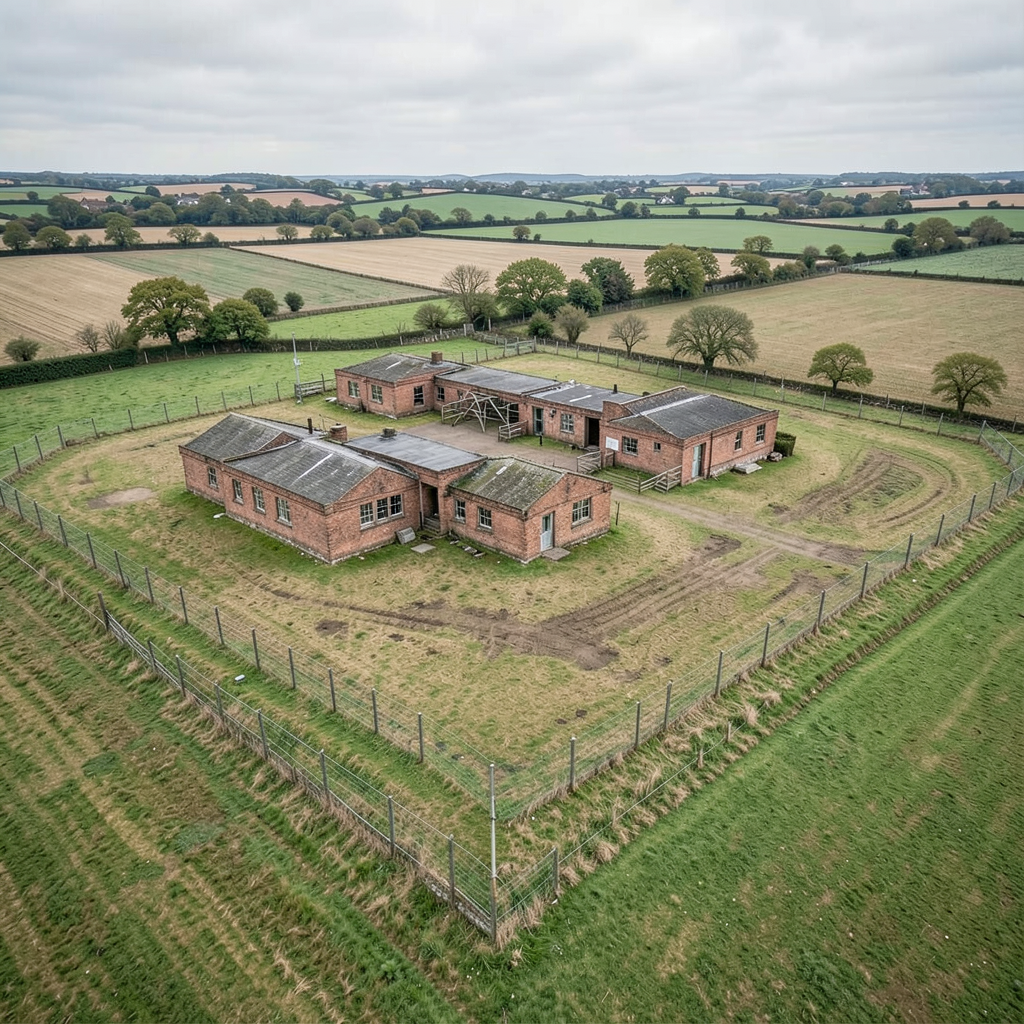

An electoral division representative and local council representatives have urged government officials to discard proposals to accommodate as many as 1,256 individuals seeking refuge in the United Kingdom at a decommissioned military installation in Oxfordshire.
Piddington Parish Council disclosed that reservations expressed initially had intensified following examination of documentation submitted by the Home Office, comprising 25 supporting files pertaining to the scheme at the former munitions storage facility located in the vicinity of Arncott.
The local authority maintained that the submission seemed deficient, citing unresolved environmental assessments, outstanding uncertainties regarding sewage systems and utility networks, and deficiencies identified in the site’s emergency evacuation planning.
The council declared that when the scheme was first publicised in the summer, the argument had been constructed prior to substantiation being available.
The department responsible for immigration had advised stakeholders to anticipate the formal submission.
The submission has now been received, spanning 25 documents, and validates existing concerns rather than resolving them.
The council drew attention to observations documented within the submitted reports, including recognition by an ecological specialist that his evaluation could not constitute a thorough examination of the land.
Additionally, the council condemned the absence of any suggested pedestrian route connecting the facility to amenities in the surrounding area, noting that a planning adjudicator had dismissed a reduced-scale proposal on identical terrain in 2003 partly due to pedestrians being compelled to traverse roads lacking illumination.
The council stated that official guidance suggesting inhabitants would be actively advised against walking and supplied with fluorescent garments should they do so fell short of adequate compensation.
The council statement continued that such measures constituted acknowledgement rather than resolution.
While emphasising no opposition to the principle of providing safe accommodation for those seeking sanctuary in Britain, the council maintained objections to the magnitude of the undertaking and the planning procedure being employed.
Current requests include scrutiny of the claimed necessity for rapid implementation, completion of pending assessments and inquiries prior to any determination, and expanded authority for Cherwell District Council in deciding upon the application.
Calum Miller, the Liberal Democrat member of parliament representing Bicester and Woodstock, stated that the planning paperwork had reinforced his stance against the proposal.
According to Miller, these documents demonstrate unequivocally why the former Ministry of Defence establishment represents an unsuitable location for this undertaking.
The site has never previously included residential structures.
It lacks secure transportation links, a potable water network, and connections to the electrical grid or gas supply.
Establishing such infrastructure would demand substantial expenditure and, as the National Audit Office has cautioned, would constitute poor stewardship of public funds.
While declaring the submission time-sensitive, officials required seven weeks before allowing access to the documents.
Describing something as urgent does not justify leaving essential queries unresolved.
Taxpayers, community inhabitants, and those seeking sanctuary are entitled to greater transparency than a scheme of this magnitude proceeding without complete information and meaningful engagement with local stakeholders.
Government ministers must halt these arrangements.
The Home Office submission presently accepts public submissions, with Piddington Parish Council intending to lodge comprehensive objections and urging local residents to submit comparable representations.