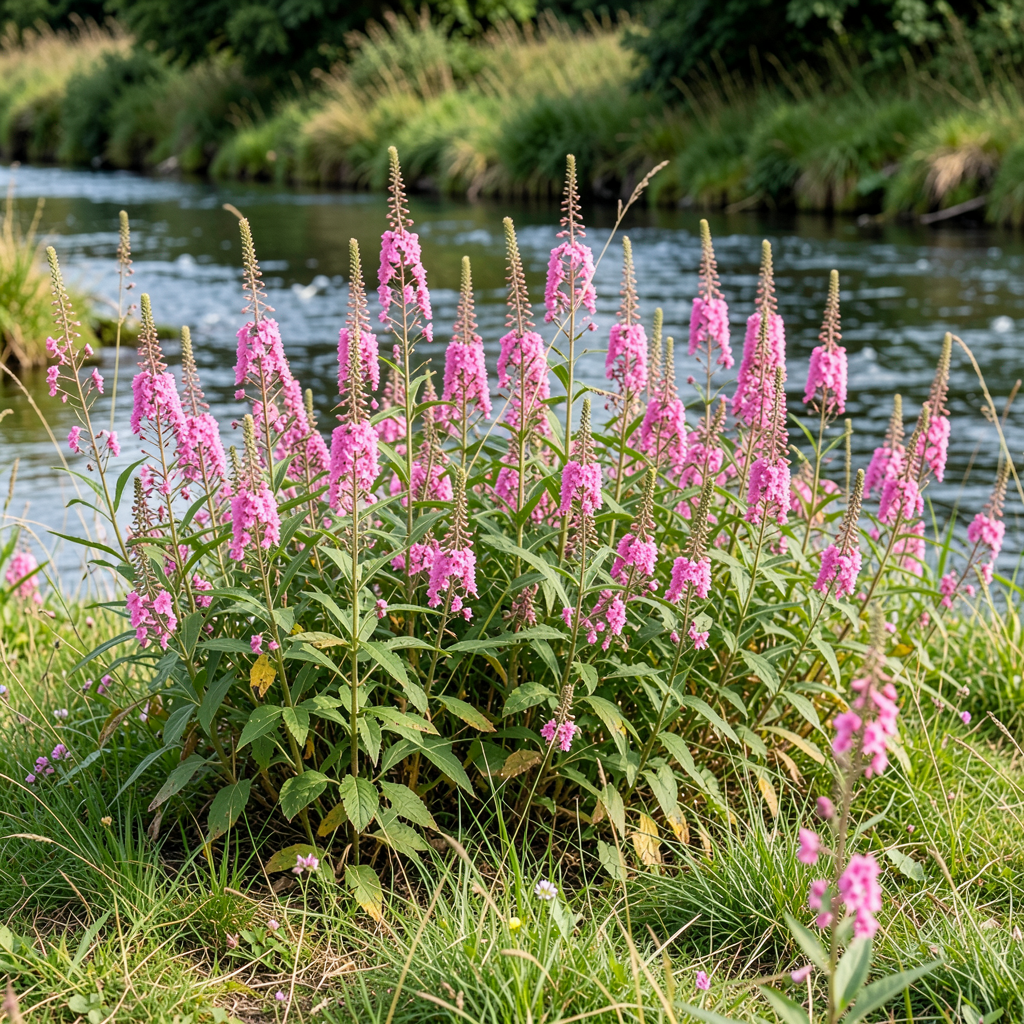

A programme to address the proliferation of an aggressive non-native plant threatening aquatic ecosystems in Oxfordshire has been initiated by an environmental conservation organisation.
The initiative focuses on controlling Himalayan Balsam, an invasive species originating from abroad, which has been documented along substantial portions of the River Thames and its tributary, the River Ock.
The Freshwater Habitats Trust is leading the effort, with funding provided by Thames Water.
The scheme involves volunteers documenting the distribution of the plant to enable focused intervention against its environmental effects.
Authorised volunteers will conduct assessments throughout the River Ock catchment area, encompassing adjacent streams, ponds and marshland situated south of Oxford.
Himalayan Balsam, scientifically identified as Impatiens glandulifera, is an annual species bearing fragrant blooms in pink and purple hues.
The plant arrived in Britain through the horticultural trade as a decorative garden specimen, according to the Royal Horticultural Society.
The invasive weed poses problems for river corridors through its dense, towering growth that displaces indigenous vegetation, and its presence can destabilise soil along riverbanks, increasing erosion risk.
The Freshwater Habitats Trust serves as the coordinating body for the River Ock Catchment Partnership, a collaborative network of entities dedicated to preserving and rehabilitating freshwater and wetland environments throughout the drainage basin.
Oxfordshire has been designated as one of the Freshwater Habitats Trust’s Priority Freshwater Landscapes, recognised for its extensive network of waterways, floodplain wetlands and standing water bodies.
The charitable organisation is collaborating with regional stakeholders to reinstate and link these habitats as part of its broader strategy to develop the Freshwater Network, establishing more diverse and interconnected environments for aquatic species.
Data gathered during the surveys will be forwarded to the county’s environmental records centre and employed to formulate a strategic approach specifically tailored for the catchment area.